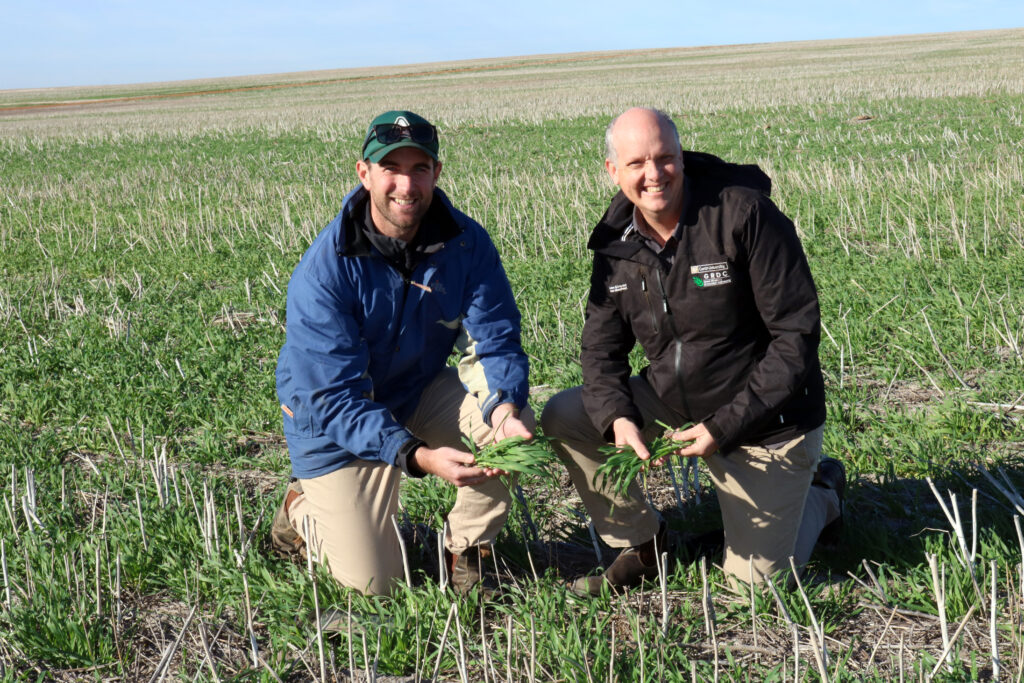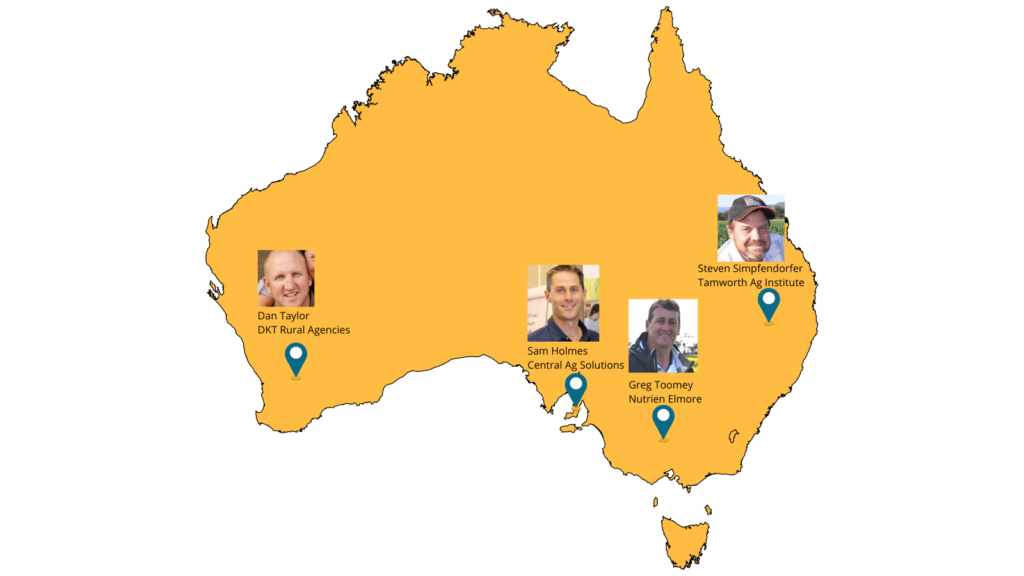

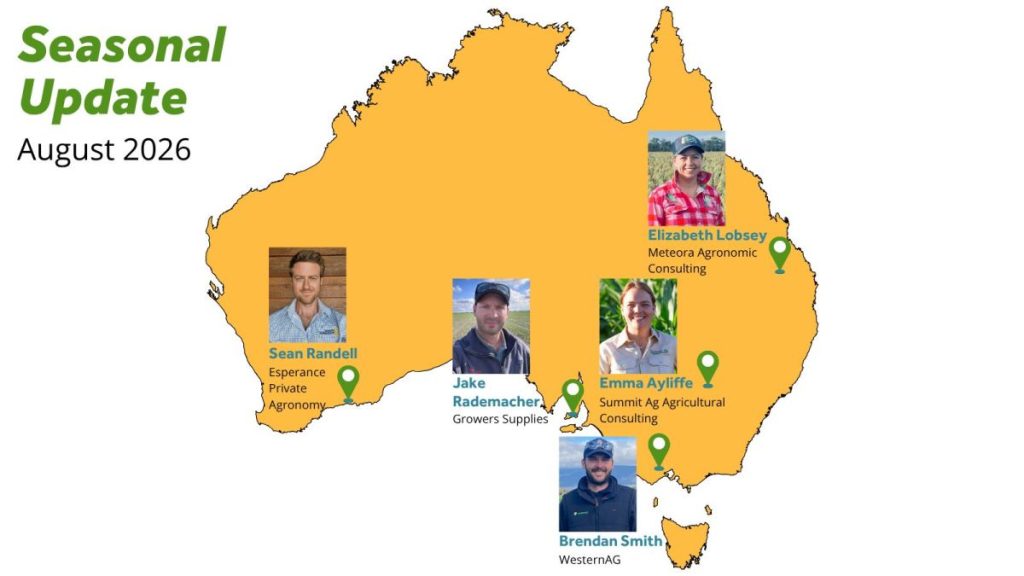
In early August, we spoke with CCDM Director Mark Gibberd and five agronomists to understand how the season is progressing in their regions. They shared insights into key seasonal challenges and opportunities, along with practical advice for growers: Jake Rademacher (SA), Elizabeth Lobsey (QLD), Sean Randell (WA), Emma Ayliffe (NSW) and Brendan Smith (VIC).
Jake Rademacher, Growers Supplies Agronomist, Warooka (SA)
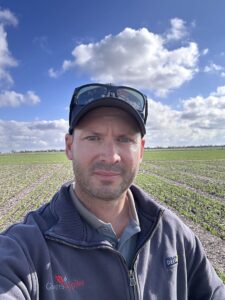
Above-average growing season rainfall across the Yorke Peninsula has set the region up for a promising season, with strong yield potential and full soil moisture profiles supporting crops. However, wet conditions have created challenges for growers, limiting access to paddocks for in-season management.
“Winter basically started where autumn finished,” says agronomist Jake Rademacher. “Most of our area has received more than 300 mm of growing season rainfall.”
While snail and green bridge issues have largely been managed, fungal diseases have become a key concern. Net blotch has been particularly aggressive in barley, while barley leaf rust and powdery mildew are also being closely monitored in susceptible varieties.
Lentil crops have responded strongly to the favourable conditions, with many reaching canopy closure three to four weeks earlier than usual. However, the dense canopies are increasing the risk of diseases such as Ascochyta blight, grey mould and sclerotinia.
“We’re trying to be proactive and apply fungicides at canopy closure because timing is extremely important,” Jake says. “If that first spray is too late, diseases like grey mould and sclerotinia can really impact yield later in the season.”
As spring approaches, Jake encourages growers to remain vigilant. While yield potential remains high, warming conditions could accelerate disease development.
“You might have a clean paddock one week, but disease pressure can increase rapidly when conditions are favourable. The key message is to get out, monitor crops closely and be proactive with management decisions.”
Elizabeth Lobsey, Meteora Agronomic Consulting, Dalby (QLD)
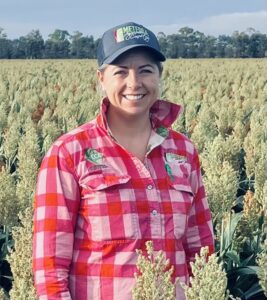 The Darling Downs remains exceptionally dry, with a lack of rainfall continuing to limit crop prospects across the region. Cooler temperatures and frosts have arrived, but meaningful rain is still missing.
“It’s not looking good rain-wise, to be honest,” says agronomist Elizabeth Lobsey. “I just don’t know if a lot of these crops are going to make it to September without some rain.”
Most winter crops were planted to provide ground cover rather than grain production. While irrigated crops are performing well, dryland crops are under increasing pressure, with soil moisture profiles sitting at around 50%.
Despite the dry conditions, crop development has generally remained on schedule. “Growth patterns have been normal and crops are on time,” Elizabeth says. “But we’re probably going to end up with some very short plants and we’re still going to need rain to fill grain.”
Disease pressure has remained low, with only some blotch reported in early sown barley. No significant rust outbreaks have been observed, although heavy dews and irrigated barley crops may increase the risk of disease later in the season.
The outlook remains challenging, with dry conditions forecast through August. “Have a backup plan, but don’t rush into anything,” Elizabeth says. “If we get rain in early September, make sure there’s a plan in place for success.”
Elizabeth also encouraged growers to prioritise their wellbeing. “If growers are feeling under pressure or a bit down about things, make sure they talk to people. A lot of growers are in the same boat.”
Sean Randell, Esperance Private Agronomy, Esperance (WA)

The season is progressing well along WA’s south coast, although heavy rainfall in June caused waterlogging in some coastal areas.
“Waterlogging would be the main issue for coastal crops, and then there have been a couple of frost events more inland. It’s a little bit early to tell how bad the damage has been from those,” says agronomist Sean Randell.
July rainfall was generally lower, allowing paddocks to dry out. “There haven’t really been any areas getting more than 50 mm for July, which has been good because we’ve needed things to dry out a little bit.”
While waterlogging may reduce yield potential in some paddocks, Sean says crops that escaped significant damage are still looking promising. “Anything that’s not been too affected by water still has that 2.5 tonne-plus potential in canola, and cereals are looking similar to what I said last time, with that 5.5-plus tonne potential.”
Disease pressure is increasing across the region, with powdery mildew appearing in wheat and blackleg and sclerotinia emerging in canola. “I’m seeing early stages of powdery mildew in wheat, which is expected. We are starting a lot of flag leaf fungicides on wheat now for that,” he says.
“This year has been quite bad for some canola varieties with blackleg.”
Sean says fungicide supply delays earlier in the season forced some growers to postpone applications by around two weeks. Looking ahead, his advice is for growers to keep a close watch on insect activity as temperatures begin to rise.
“It’s been quite a cold winter, but as things start to warm up as we come out of winter, insects could come out quickly. Just be mindful to keep an eye on things. One thing that may trip people up is if an insect infestation comes in and takes some of your yield potential away.”
Emma Ayliffe, Summit Ag Agricultural Consulting, Condobolin and Lake Cargelligo (NSW)
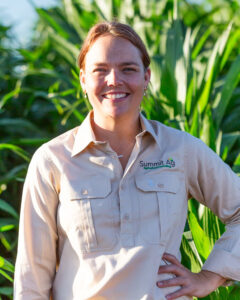
“The Central West region is looking promising, with well-developed crops, but rain is needed to reach their full potential,” says agronomist Emma Ayliffe.
The region is facing challenges, with some crops already running out of moisture and requiring irrigation. “There’s just no moisture underneath them to get the biomass out of them that they need,” she says.
Frost has also been reported, with any potential damage still being assessed.
Disease pressure remains high. “We have almost every disease,” Emma says.
In canola, aerial blackleg levels are higher than they have been for many years, while sclerotinia risk is currently lower due to dry conditions. In cereals, stripe rust is appearing in wheat, yellow leaf spot is widespread in continuous wheat paddocks, and low levels of septoria are also present. Oats are showing early signs of disease.
Barley is experiencing particularly high disease pressure. “I’ve never seen so much powdery mildew on dryland crops before, it’s phenomenal,” Emma says. Spot form net blotch and unusually early levels of net form net blotch are also present.
Fungicide availability remains a major challenge. “Across the board, there’s no fungicides within a lot of the reseller networks that we are able to access,” Emma is urging growers to plan and secure products wherever possible.
Brendan Smith, WesternAG, Ballarat (Vic)
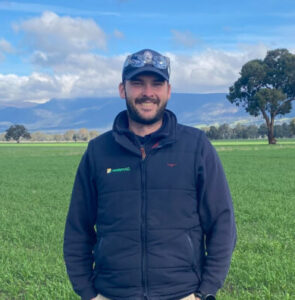 “We’ve had an exceptionally wet June and July,” explained agronomist Brendan Smith.
The weather has created challenges for spraying and paddock trafficability but improving conditions over recent weeks have supported crop growth and boosted yield prospects.
“Providing crops have got through that wet period with relatively low damage or plant loss, I would suggest we’ve got really high yield expectations,” he said. “It’s all about managing nitrogen application to meet that demand now.”
Disease pressure remains high across the region, with septoria in wheat, net blotch in barley and blackleg in canola all being reported. “Consistent leaf wetness has caused high levels of septoria starting to rear its head now in certain varieties,” Brendan said.
“We’ve certainly seen some canola lines become more susceptible to blackleg, so they’re the ones we’ve targeted with fungicide applications.”
Growers have also faced challenges sourcing fungicide products this season. “We’ve had to scramble and come up with alternatives to what we would potentially normally use,” he says.
While disease pressure remains high, insect activity has been relatively low compared with earlier in the season. “At this point in time there are no major threats that we’re monitoring.”
Looking ahead, Brendan encouraged growers to align nitrogen applications with crop potential and seasonal conditions. “I’d advise growers to speak with their consultants or advisers and come up with a reasonable nitrogen strategy in line with crop potential and crop expectations.”
Mark Gibberd, CCDM Director
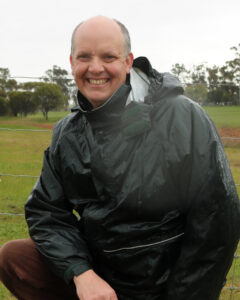
“This is crunch time. The decisions taken over the next few weeks will play a major role in protecting yield and grain quality at the end of the season.” says CCDM Director Professor Mark Gibberd.
Disease pressure is increasing across many grain-growing regions, with net blotch in barley remaining one of the most commonly reported diseases this season.
While growers focus on keeping disease in check, CCDM researchers are continuing to work on long-term solutions says Mark. The Centre is currently releasing new pre-breeding material carrying resistance to net form net blotch, with spot form net blotch-resistant material from Associate Professor Simon Ellwood’s Cereal Disease Group expected to follow.
Fungicide resistance also remains a major focus for CCDM. Associate Professor Fran Lopez-Ruiz and his team continue to investigate suspected cases of fungicide failure, helping to determine whether reduced disease control is due to fungicide resistance or other factors such as weather conditions, disease pressure, or application timing.
Some agronomists have reported difficulty accessing preferred fungicides this season, meaning growers may need to adjust their management strategies. Mark says it is important that any alternative products are registered for the target crop and disease and that fungicide resistance management guidelines are followed wherever possible.
“The ideal situation is good disease control through really good timing of fungicide applications,” he says. “If disease populations are allowed to increase unchecked, control becomes more difficult and the risk of selecting for fungicide resistance rises significantly.”
With spring approaching, Mark is encouraging growers to keep monitoring crops closely and make management decisions based on disease levels within individual paddocks.
“Now is the time to be out there scouting crops, talking with your agronomist and making sure your disease management plan is still on track,” he says.
Links and Resources:
- Check out the Australian Fungicide Resistance Extension Network website for resources on fungicide resistance.
- Get in touch with the fungicide resistance group if you see fungicide failure, to get some samples across for testing. Contact them at frg@curtin.edu.au